
When a mold begins to require more maintenance, generate more scrap, or lose commercial relevance, keeping it simply because it is already there can become expensive. The right decision should be based on data, not just the age of the mold.
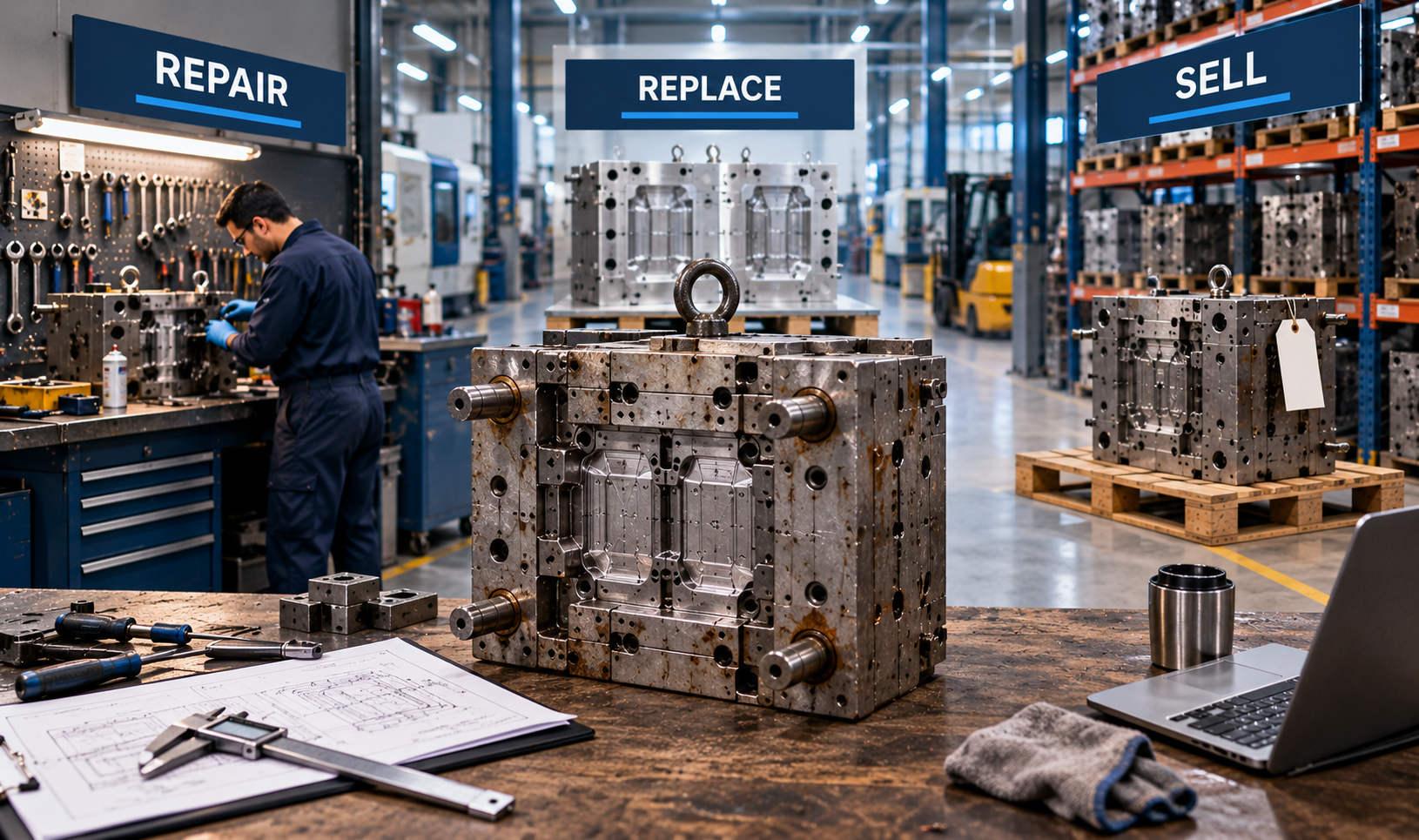
Three options for an existing asset
Some molds do not fail all at once. They keep producing, but every month they require a little more attention: another repair, an adjustment, a few extra seconds of cycle time, or additional effort to control scrap. Because the decline happens gradually, it is easy to become accustomed to the cost. The problem begins when no one stops to ask whether the asset is still contributing to the business or whether it is time to make a different decision. The first option is usually repair. It can make sense when the problem is isolated and the mold's main structure remains in good condition. Wear components, ejector pins, damaged surfaces, or cooling circuits may, depending on the situation, be repaired without replacing the entire mold. The decision should compare the cost of the work with the additional service life and productivity improvements the repair is expected to provide.
Variables that should be compared
Replacement may be the better option when repairs become frequent, the part has changed, or the mold consistently limits cycle time and quality. A new mold may also be necessary when future production requires more cavities, a different material, or compatibility with another injection molding machine. In those situations, continuing to invest in a design that no longer supports the operation can become more expensive over time. The third option is often overlooked: selling. A mold that no longer fits one company's strategy may still have value to another manufacturer, particularly if it produces a part with existing demand, has supporting documentation, and remains in serviceable or repairable condition. Keeping inactive tooling takes up space and ties up capital. Evaluating its market value can turn an idle asset into resources for future investments. Key factors to consider include: Future demand for the part Physical condition of the mold Maintenance costs Actual productivity Potential resale value
Turning tooling into value
To make the decision, it is useful to evaluate these five factors together: future demand for the part, physical condition, annual maintenance costs, actual productivity, and potential resale value. None of them should be considered in isolation. An older mold with low maintenance requirements may still be profitable, while a relatively new mold may no longer make business sense if demand for the part has disappeared.
When a mold no longer fits the operation, storing it indefinitely does not have to be the only outcome. Molds Unlimited can help explore replacement options and evaluate opportunities to move tooling that may still have value in another manufacturing operation.