
Automation promises speed and consistency, but a mold that was not designed for it can turn that investment into a months-long project. Before automating, it is worth asking whether adapting the current mold makes more sense or whether bringing in one that is already prepared for automation is the better option.
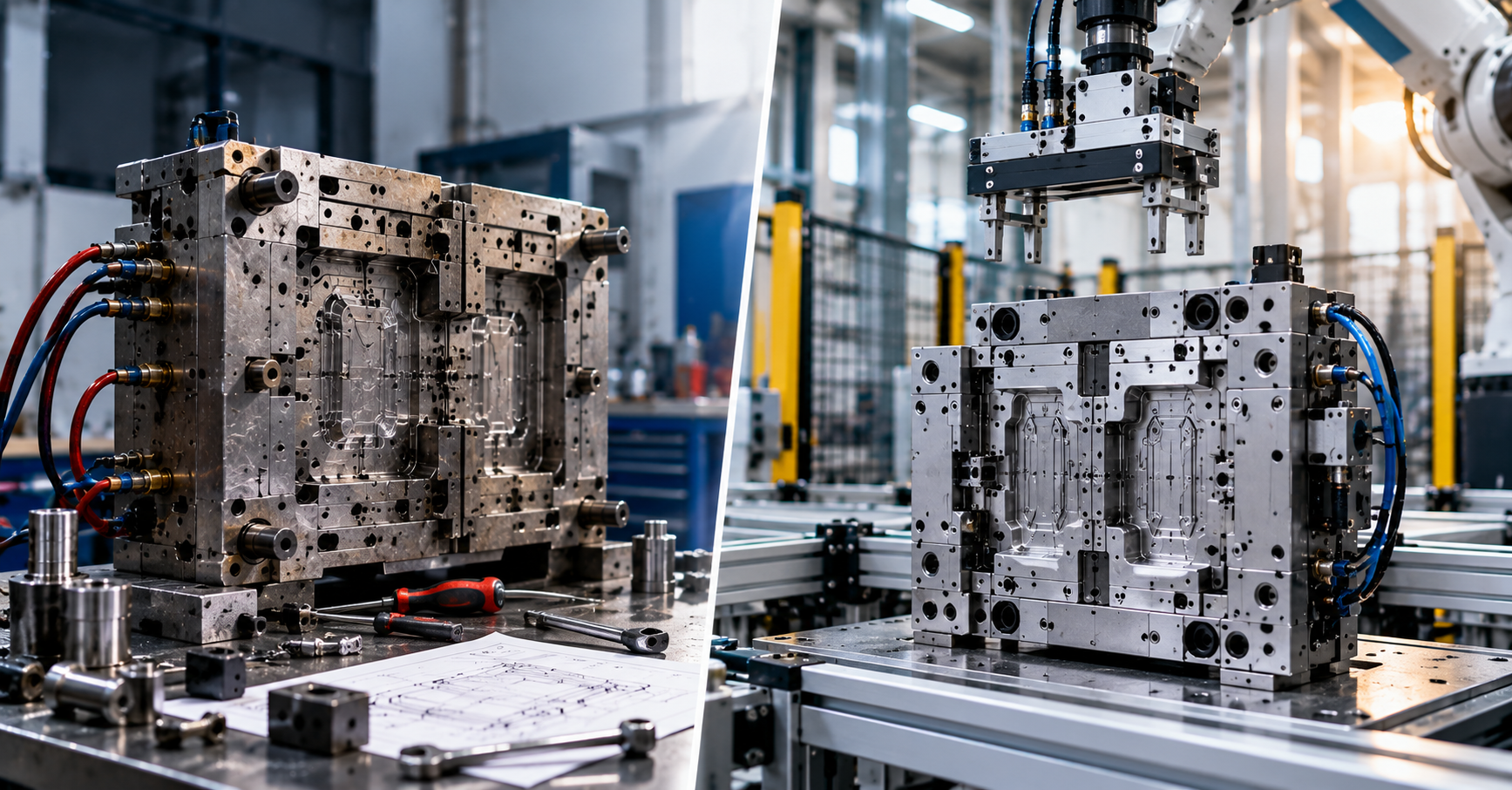
The hidden cost of adapting a mold that was not designed for automation
The robot has already been quoted, the cell looks good on paper, and the objective is clear: produce with less manual intervention and greater consistency. Then an uncomfortable question comes up: can the current mold support that level of automation? Many plants discover the answer only after the project is already underway, just as modifications to ejection, cooling, or venting begin adding time and cost. Before making a decision, it is worth estimating what it would cost to prepare the current mold to operate without frequent manual intervention and comparing that figure with the cost of acquiring a used mold that already meets those requirements.
When an automation-ready mold may make more sense
The used mold market offers an alternative that many plants may overlook: tooling that was already designed or adapted for automation, with a documented history of cycles, maintenance, and compatibility with robotic part removal. Bringing in a mold with these characteristics can shorten the time between making the investment decision and reaching stable production. The important step is confirming that the mold is compatible with the intended machine, resin, and cell design. A mold that is automation-ready in one facility may not necessarily be ready for another, so technical validation remains essential before completing the purchase.
A decision based on numbers, not just technology
The question is not whether automation makes sense, but which path can deliver a repeatable process faster and with less risk: adapting the tooling already in place or bringing in a different asset. That comparison should include downtime, modification costs, the remaining service life of the current mold, and the potential resale value of tooling that no longer fits the automation plan.
If an automation project is already on the table, the mold should become part of the conversation early. Molds Unlimited can help explore available tooling and compare whether adapting the current asset or bringing in another mold could move the operation toward a stable automated process faster.