
Rows of molds on racks can look like inventory. They can also hide completed programs, tooling with no internal owner, assets that no longer fit current machines, and thousands of dollars occupying space without a decision behind them. The problem is not that molds are stored. It is not knowing why they are still there.
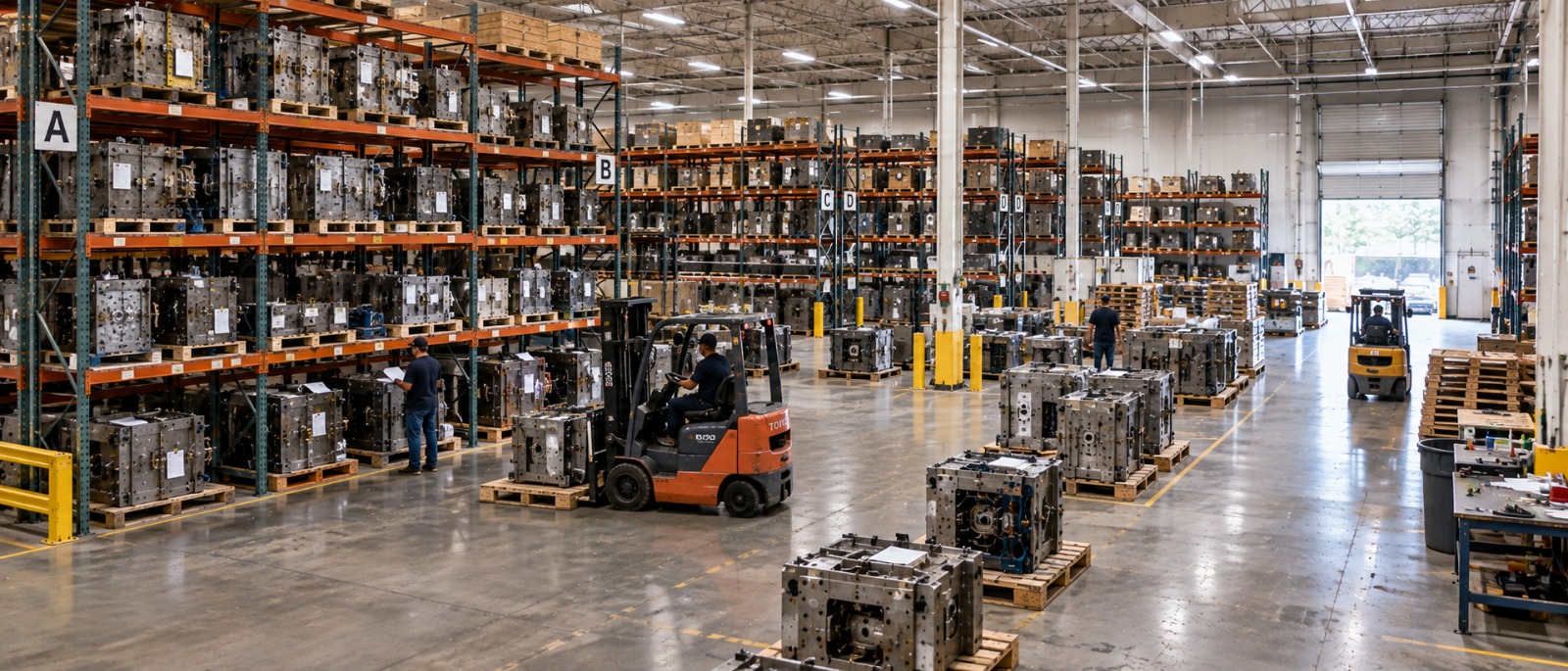
Start with a simple question: what job does each mold have?
A useful audit does not begin with weight or build year. It begins with purpose. Is the mold tied to an active program? Is there recurring demand? Could a customer still request parts from it? Or has it remained in storage simply because no one made a decision when the project ended?
Separating tooling into simple categories, active, possible return, no defined program, and candidate for disposition, changes the way the warehouse looks. What seemed like a collection of assets starts to show priorities.
Storage has a cost too
Industrial space is not free. A mold that sits for years occupies rack capacity, requires handling, and may deteriorate if it is not preserved correctly. It can also make it harder to locate and move the tooling that is actually cycling through production.
The easier cost to miss is opportunity. A mold without a plan may have value to another operation, provide a starting point for a new project, or release capital if sold. Keeping it indefinitely is not always the conservative choice.
Not every idle mold should leave
Selling simply to clear space is not a strategy either. Before making that call, review ownership, program history, mold condition, compatibility with available machines, potential part demand, and the cost of recreating the tooling if it is needed again.
A mold that is not running today may still matter if it supports a service program or an intermittently ordered part. Another may have spent years in storage without a clear commercial reason to remain.
Turn the warehouse into a decision list
The goal is not to have every mold in production. It is to give every mold a documented reason to stay, move, be repaired, or leave. That turns physical inventory into a management tool.
If your warehouse review identifies molds that no longer fit the operation, Molds Unlimited can help evaluate buying and selling options in the plastics tooling and machinery market. Sometimes recovering space starts by assigning a decision to every rack.