
Two quotes land on a buyer’s desk. Both promise to produce the same container or component, yet the prices are far apart. Before deciding that one is overpriced or the other is a bargain, it helps to understand what is actually included.
The same part does not mean the same output
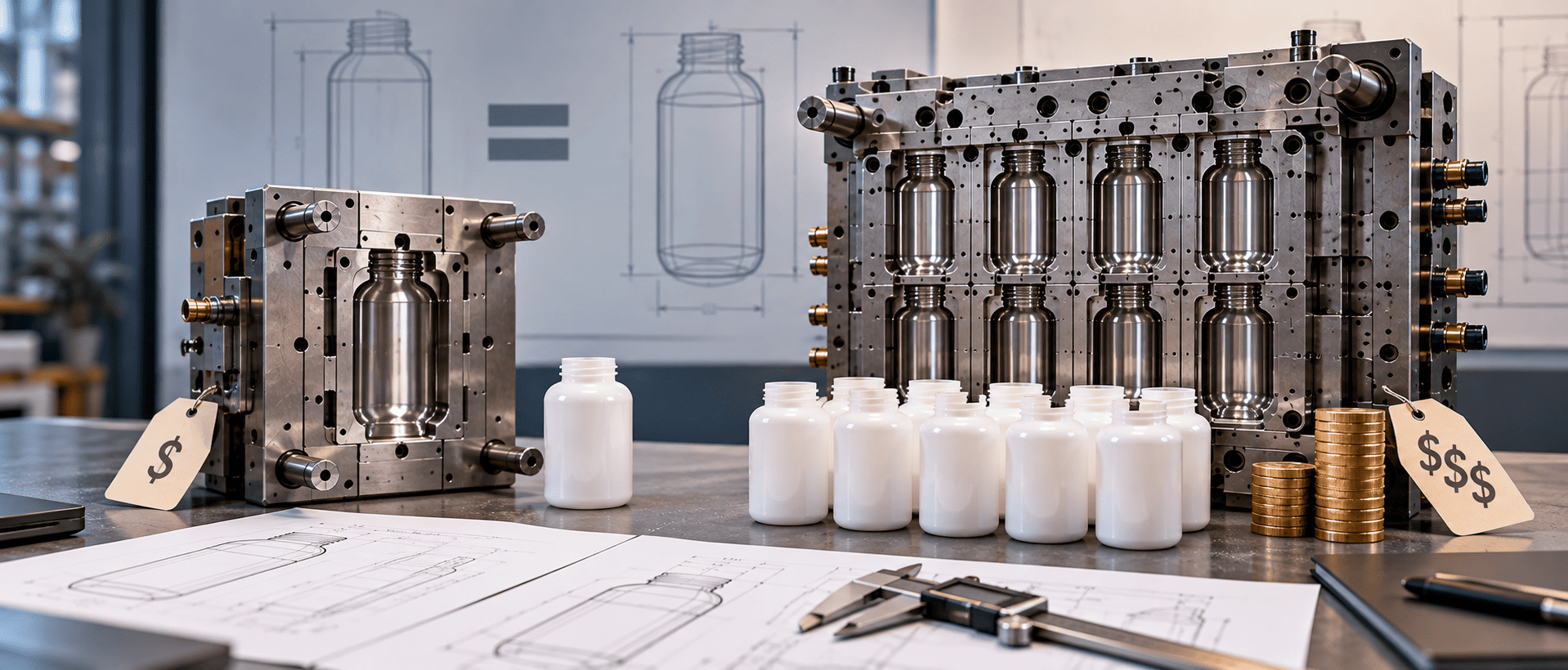
A single-cavity mold and an eight-cavity mold may produce visually similar parts, but their output, complexity, and balancing requirements differ considerably. Side actions, threaded features, challenging geometry, and tight tolerances also affect cost.
Expected lifetime production volume helps determine whether a larger upfront investment may be justified over time. Comparing only the purchase price overlooks the cost per acceptable part.
Tool steel and history matter, too
Steel grade, heat treatment, machining quality, surface finish, and cooling design can influence wear resistance, maintenance needs, and consistency. For pre-owned tooling, repair history, modifications, and known production cycles add useful context. Documentation is not always complete, making a technical inspection particularly valuable. A price difference may reflect genuine capabilities, but it may also signal risks that deserve investigation.
Buyers should also distinguish manufacturing cost from ownership cost. One tool may require more maintenance, hard-to-source replacement components, or longer setup time. Another may cost more upfront but simplify repairs or production changeovers. Neither outcome should be assumed without reviewing the specific project.
A meaningful comparison asks both suppliers for equivalent information and models realistic production scenarios, including expected downtime, scrap, and quality requirements. The review should also establish whether replacement components and technical support will be available throughout the planned production life. That information can materially change the total cost of ownership.
The right price depends on the job
Define annual volume, resin, tolerances, startup schedule, and the press that will run the tool. Ask about cavity count, included components, condition, and available test results.
Molds Unlimited connects tooling opportunities with real manufacturing needs. The best purchase is not automatically the lowest-priced one. It is the option most likely to meet production requirements without introducing avoidable costs later.