
When a machine listing says 50 tons, 500 tons, or 1,000 tons, it is easy to assume the number describes machine weight or how much plastic it can inject. It does not. Tonnage refers, in simplified terms, to the clamping force that keeps the mold halves closed while molten plastic fills the cavity. Understanding that distinction makes machine comparisons far more useful.
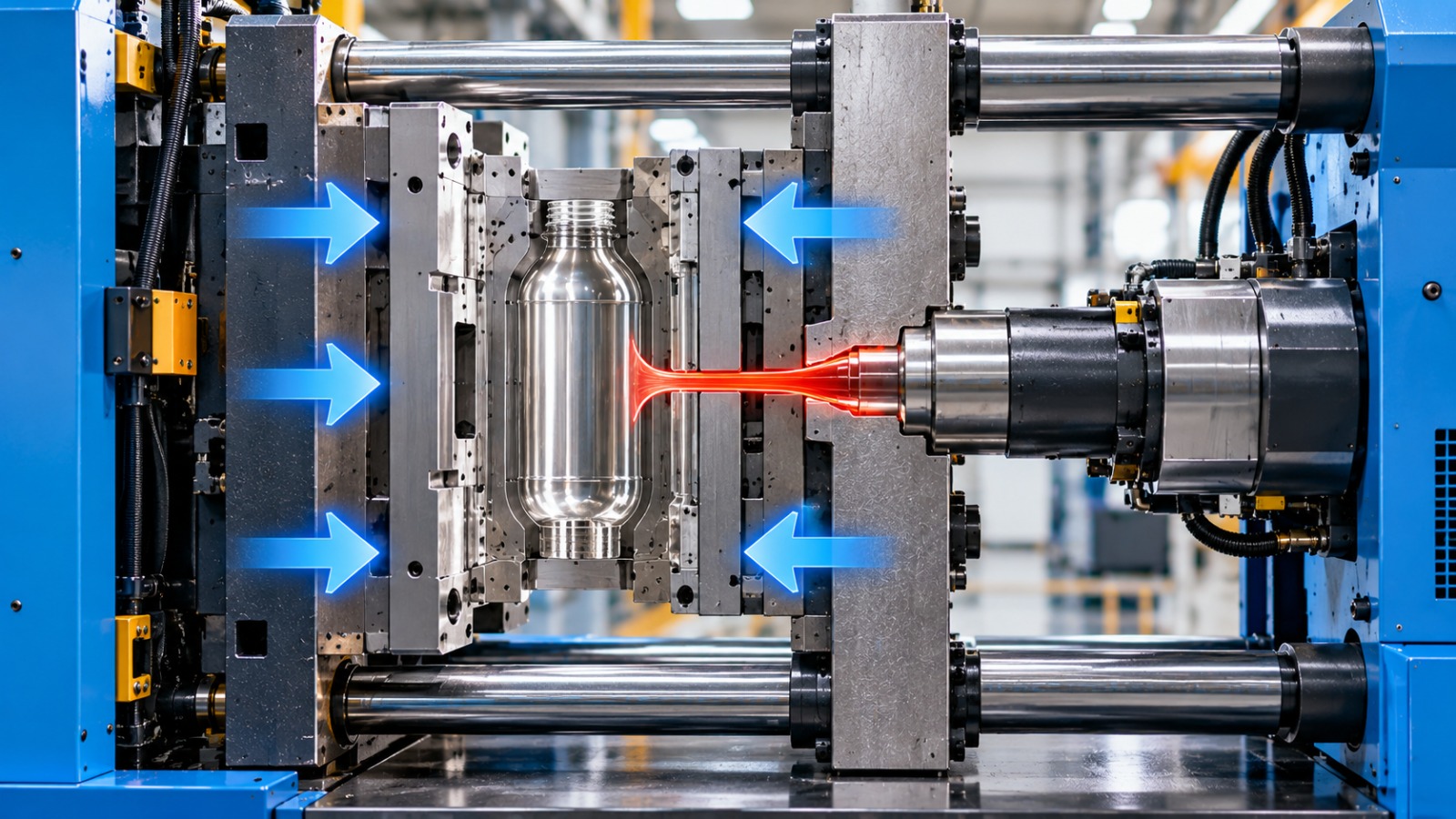
Injection pressure is trying to open the mold
During injection, material enters the cavity under pressure. The clamp must provide enough force to keep the mold closed and stable. Insufficient clamping force for the application can contribute to flash and process instability.
The part matters more than the number by itself
Required clamp force depends on factors such as projected area, number of cavities, material, and processing conditions. Two parts with similar weight can call for very different machines if their geometry and projected area differ.
More tonnage can also mean more machine than you need
Oversizing does not automatically improve production. It may mean more capital, more floor space, and a poor match between tooling and equipment. The useful question is not “What is the biggest machine available?” but “What range does this application require?”
The mold still has to fit and function
Clamp force is only one selection point. Tie-bar spacing, platen size, daylight, ejector stroke, injection unit, and physical mold compatibility also matter. A machine specification sheet should be read as a system.
Tonnage is a useful first filter
When reviewing used equipment, knowing the required range quickly narrows the field. Then comes the deeper review of specifications, condition, controls, and project compatibility.
Closing
Start with the application before shopping by brand or price. Molds Unlimited can help manufacturers review available machines and molds so the search begins with real production requirements rather than a single headline number.