
The mold has arrived, the crate is open, and the tool appears ready to go. Yet a meaningful amount of work can stand between unloading it and producing the first acceptable part. Preparing a mold for production involves much more than checking its outside dimensions.
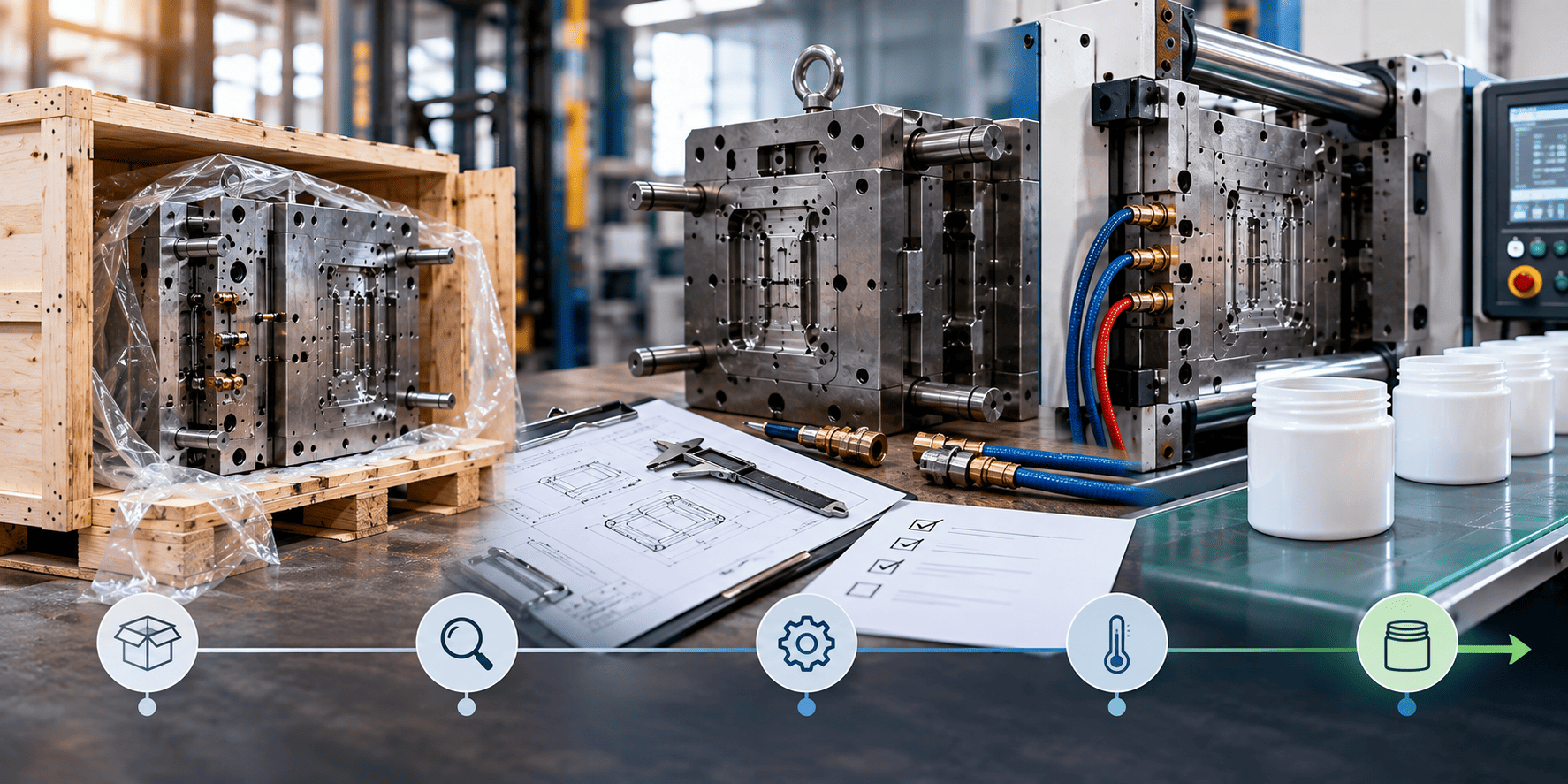
Compatibility must be confirmed before installation
Before installation, the technical team should confirm several basic points: • Physical compatibility: dimensions, weight, mounting pattern, and tie-bar clearance. • Movement: ejection requirements. • Utilities: cooling connections and any relevant electrical or hydraulic interfaces. • Machine capability: the operating conditions required for the mold to run within an appropriate range. These checks are especially important when a used mold arrives from another facility. A tool that physically fits into a press is not necessarily production-ready on that press.
The first trial is a test, not a formality
After inspecting cleanliness, mechanical condition, and available documentation, the team begins process setup. Technicians observe filling, cooling, ejection, appearance, and part dimensions. Flash, warpage, or inconsistent part weight may call for adjustments. Recording each change helps separate tooling issues from material and process issues. Skipping this stage to save time can turn a fast startup into days of troubleshooting. Documentation becomes especially useful when shifts change or new employees join the team. Setup photographs, parameter records, connection labels, and dimensional results create a reference for future runs. If the mold moves again, those records can shorten troubleshooting. They do not replace inspection or process validation, but they reduce dependence on one employee's memory. Producing the first acceptable part matters; being able to repeat that result on the next production run matters just as much.
A sound purchase deserves a sound transition
Plan who will receive the mold, which documents should accompany it, whether accessories are missing, and what acceptance criteria will apply to the first parts. Molds Unlimited can support the equipment-selection conversation with these operational requirements in mind. The objective is not simply to put another asset on the plant floor. It is to integrate tooling into a process capable of delivering repeatable parts that meet the customer’s needs.