
A cap fits in your hand. A container may weigh only a few grams. Yet the tool producing it can contain enough steel to require cranes, forklifts, and a planned installation. The scale difference makes sense once a mold stops being viewed as a simple negative of the part and is understood for what it is: a precision machine operating inside another machine.
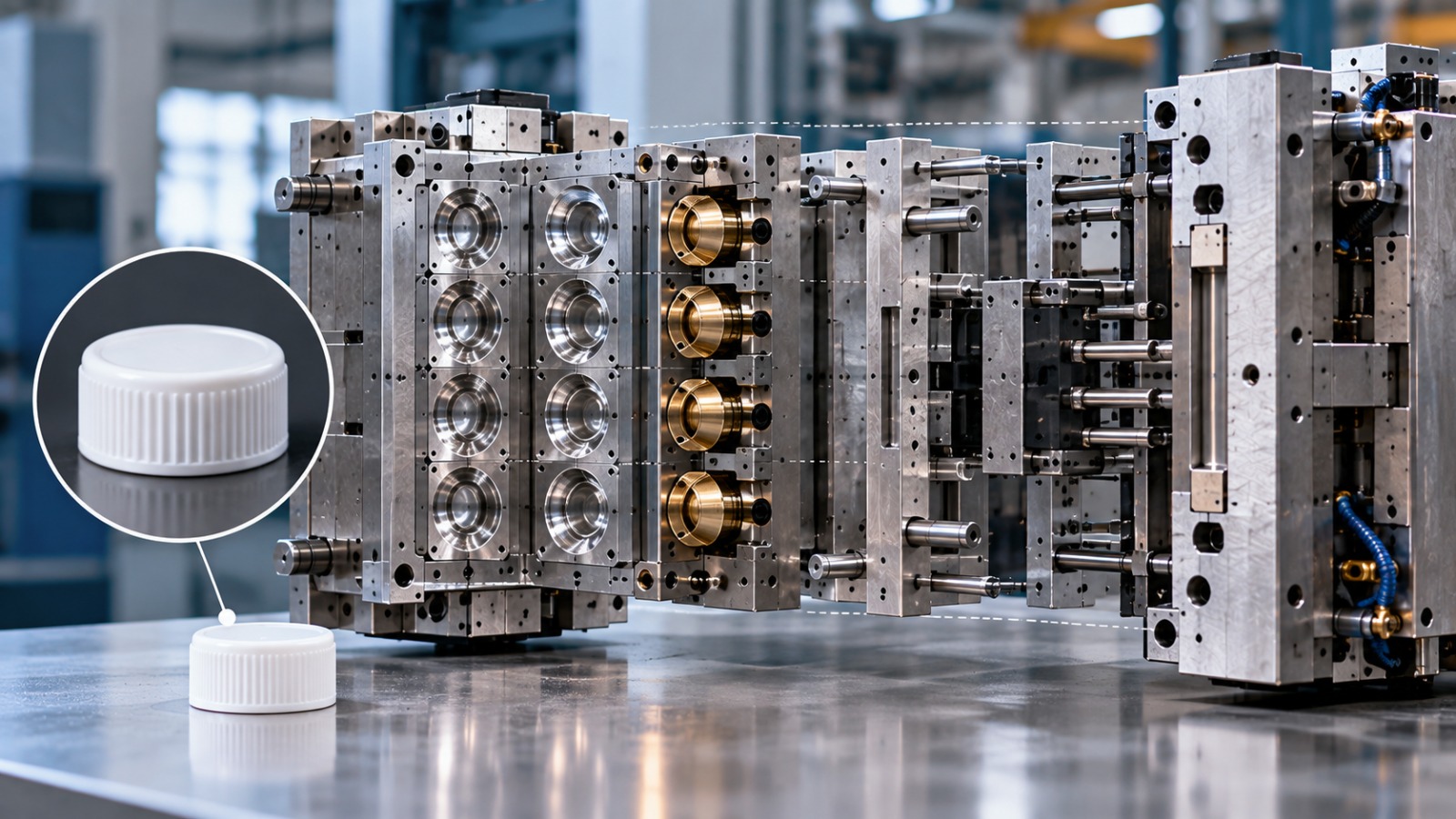
The cavity is only the center of the story
Around the shape that forms the part are plates, inserts, leader pins, ejector systems, runners, connections, and enough structure to keep everything aligned cycle after cycle.
One small part may be multiplied many times
Small products are often produced in multi-cavity tools to increase output per cycle. Eight, sixteen, or more cavities mean more working area, more components, and a physically larger tool.
Steel has to survive repeated cycles
A mold sees pressure, heat, opening, closing, and motion over and over. Rigidity helps preserve alignment, dimensions, and function over the expected service life.
Hidden movements take space too
Threads, undercuts, slides, lifters, and other mechanisms can make a simple-looking part require a surprisingly complex internal architecture. Two molds producing similarly sized products may have very different dimensions and weights.
Moving the mold is part of the project
Buying tooling does not end with the commercial agreement. Transportation, rigging, machine capacity, tie-bar clearance, and the plant’s ability to handle the tool safely all belong in the plan.
The next time you see a small plastic part, consider the equipment hidden behind it. When Molds Unlimited evaluates available tooling, the conversation includes not only what the mold produces, but also its dimensions, cavities, compatibility, and what it will take to put it back into production.