
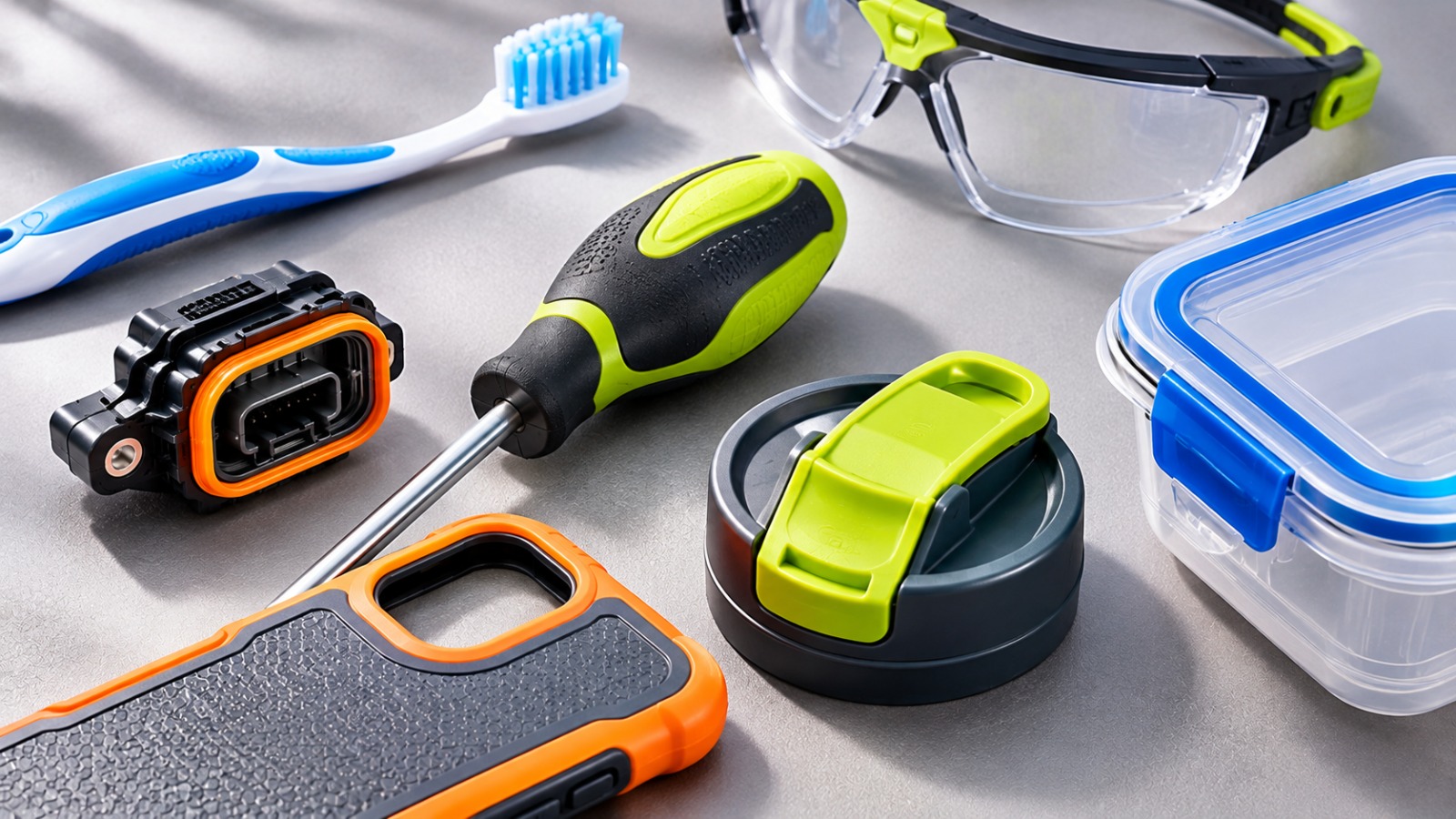
A rigid handle with a soft-touch grip. A closure made in two colors. A molded part with a seal built directly into it instead of attached later. These may look like simple product-design choices. On the production floor, they can point to a more demanding process: molding two materials or components as part of one manufacturing sequence.
When the second function moves into the mold
On November 23, PlasticsToday reported on Engel’s new e-mac Combi, an all-electric machine configured for multi-component injection molding. The announcement is a useful window into a process already used in everyday products, even though end users rarely think about how those products were made. Engel points to applications ranging from toothbrush handles and medical-device housings to technical automotive components.
The concept is easy to describe and harder to execute. Instead of molding separate parts and assembling them later, two or more materials can be integrated during molding. A manufacturer might combine a rigid base with a flexible area, use contrasting colors, or give different sections of the same part different functions
The finished part is still one part. The production system is not.
Adding a second material is not simply a matter of adding another resin supply. The mold must account for where each material enters, when it enters, and which geometry it occupies. Depending on the application, production may require a rotary table, core movement, transfer technology, or another method that positions the first molded section for the next injection step. Material compatibility matters as well. Processing temperatures, shrinkage, bonding behavior, and cooling can all affect the result. Two materials that look ideal together in a product rendering may create very different realities once they enter the mold.
Less assembly can require more planning upstream
One reason manufacturers consider multi-component molding is the possibility of eliminating downstream operations. If a grip area, seal, or functional feature is molded directly into the part, a separate assembly step may disappear. The tradeoff is that more decisions have to be resolved before production begins: machine configuration, mold design, material pairing, sequence, automation, and expected volume. That is why a multi-component project should not begin with only one question about machine tonnage. It should begin with the finished part. What functions need to coexist? Which materials are required? How do the geometries interact? What output does the program need? Those answers help define the right tooling and machine combination.
The finished product provides the best starting point
For a plant evaluating a new program, the value of multi-component molding is not simply the novelty of producing a two-color part. The real opportunity is determining whether integrated functions can remove steps, reduce handling, or create a product that would be difficult to manufacture another way. The machine provides the capability. The mold, materials, and process determine whether that capability becomes reliable production.