
The final cycle of a production run can feel like the finish line: stop the press, pull the mold, and release capacity. The problem often appears months later when the tool returns and nobody remembers how its last run ended. Good storage protects more than steel. It protects information.
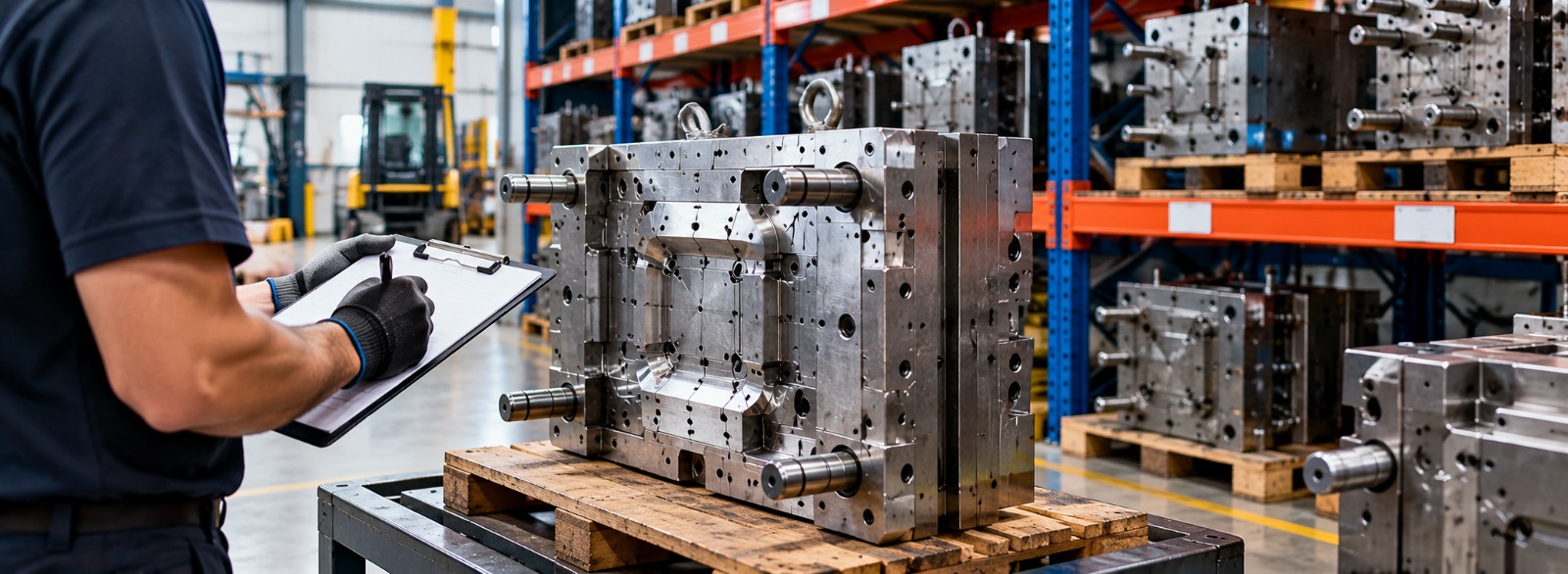
Capture the last known condition
Before teardown, record how the mold finished the run. Was it producing acceptable parts? Was there flash, wear, leakage, sticking, or cavity-to-cavity variation?
A short note and dated photographs can save hours during the next startup and help teams distinguish an old condition from a new one.
A practical storage checklist
• Last run date and press used. • Material and reference process settings. • Approximate cycle count, when tracked. • Active or blocked cavities. • Completed and pending repairs. • Condition of connectors, hot runner, cooling, and ejection. • Approved samples or dimensional reference. • Photos and assigned storage location
Stored does not always mean production-ready
A mold can be clean and protected while still requiring repair. Labeling its status prevents the next team from discovering the issue after installation.
A simple status can work: ready to run, maintenance required before setup, or pending evaluation. The key is visibility.
Documentation matters even when the mold is no longer scheduled
If a tool leaves the active production plan, its history helps determine what comes next. Knowing the part, machine, material, process history, and condition makes reuse, repair, resale, or retirement easier to evaluate.
An organized mold room is not simply one with labels. It is one where the team can quickly understand what each tool can do and what condition it is in.