
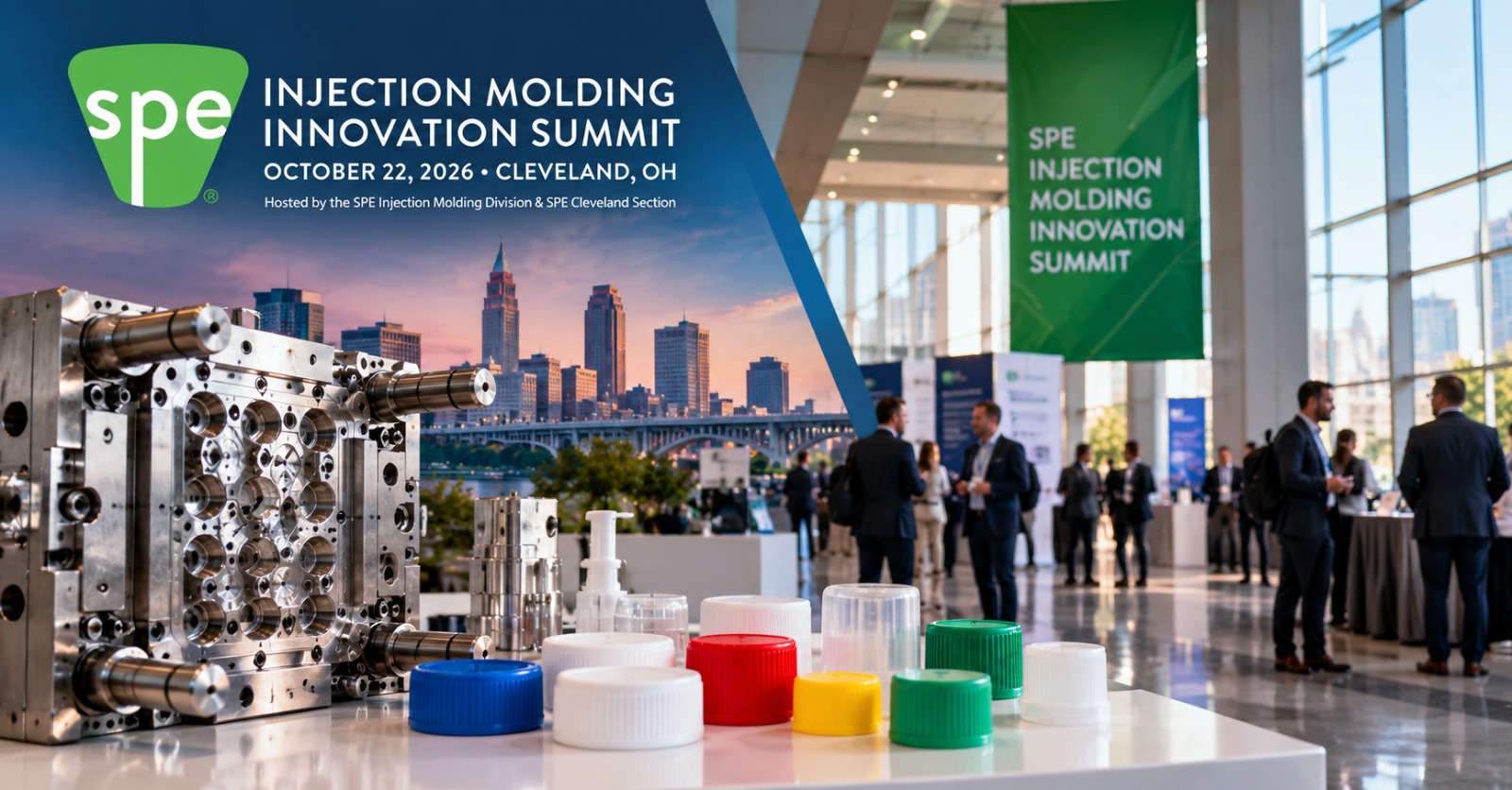
A technical conference becomes useful when its topics can be translated into practical questions for the plant. The Injection Molding Innovation Summit, scheduled for October 22, 2026 at the Corporate College Conference Center in Ohio, brings together molders, suppliers, OEMs, engineers, and technical leaders. Instead of trying to follow every new technology, manufacturers can focus on the recurring problems the industry is trying to solve.
1. Tooling is still a productivity conversation
The agenda covers equipment and tooling, cooling optimization, cavity pressure, and additive manufacturing for moldmaking. The practical question is not which technology sounds newest. It is where the plant has a measurable constraint today: cycle time, scrap, maintenance, stability, or capacity.
Documenting the current problem before investing helps separate a tool that is physically limiting production from one that may simply need a better process around it.
2. Materials can change the diagnosis
The program also addresses polymer characterization and materials. A part that falls outside specification does not automatically indicate a mold problem. Material condition, moisture, temperature, pressure, and the process window can all affect the result.
Separating those variables before modifying steel can prevent an incomplete diagnosis from becoming an expensive repair.
3. Cooling and control: seconds add up
Cooling often represents a significant portion of the molding cycle. Any optimization discussion should therefore consider channels, flow, temperature, and uniformity in addition to part geometry.
A small cycle reduction can become meaningful across thousands of shots, but the goal should not be speed alone. It should be repeatable speed without sacrificing quality.
4. Technology still needs a capable workforce
SPE lists workforce training among the Summit topics. That is a useful reminder: equipment and software create value only when teams can configure, maintain, and troubleshoot them.
Before adding technology, a plant can ask what knowledge the operating shift will need and how new process standards will be documented.
5. The question to bring home
The best outcome is not a list of technologies to buy. It is a list of priorities: Which problem costs the most today? What data is missing? What can be corrected or reused? At what point is a new investment justified?
Industry events are most valuable when they help teams ask better questions before they spend.