
The evaluation should start with tonnage, shot size, tie-bar spacing, platens, controls, history, hours, hydraulics or servos, component support, and mold compatibility. Rigging, freight, installation, and startup are also part of the real cost.
V
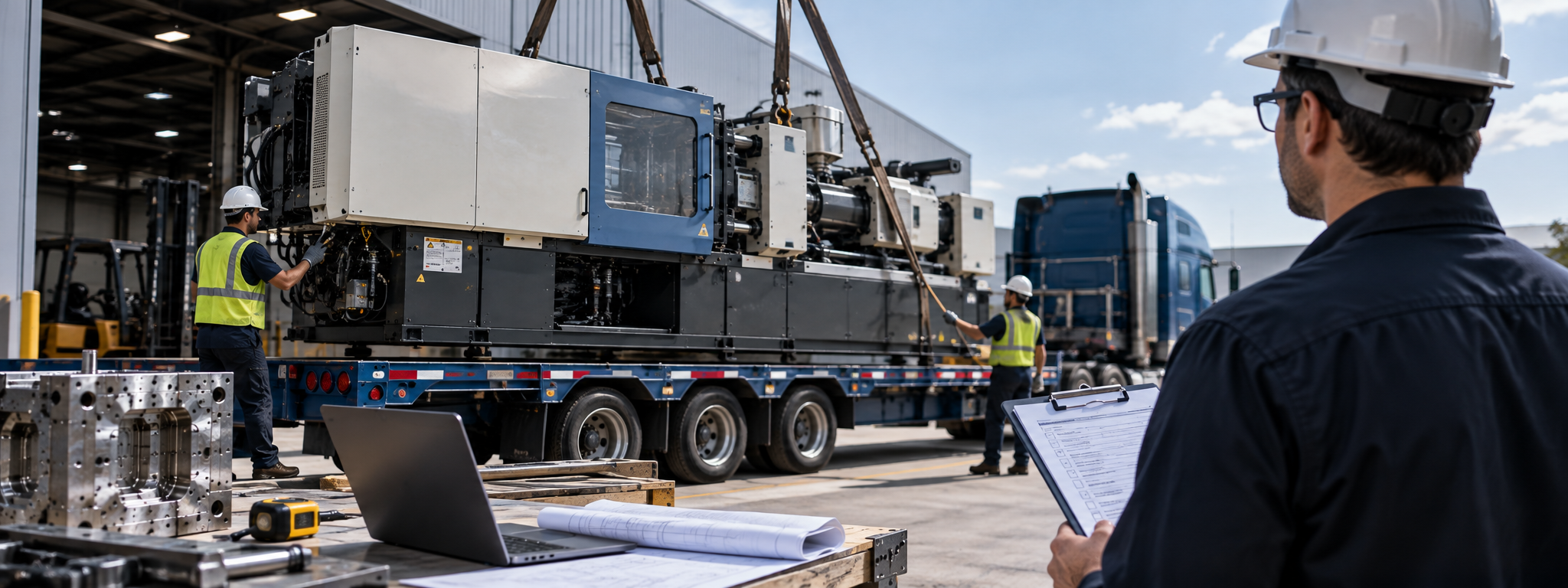
The evaluation should start with tonnage, shot size, tie-bar spacing, platens, controls, history, hours, hydraulics or servos, component support, and mold compatibility. Rigging, freight, installation, and startup are also part of the real cost. In an injection molding plant, an investment decision should begin with the part that must be produced and the capacity already available. Tonnage, mold dimensions, expected volume, resin, cycle, cavities, and machine availability belong in the same equation. Buying technology without checking that fit can simply move the bottleneck from one area to another and delay the startup the investment was meant to accelerate.
The most expensive option is not automatically the best one, and the lowest purchase price does not necessarily reduce total cost. A used machine that is available now, an existing mold that can return to production, or a different tooling and equipment combination may open paths that disappear when the comparison is limited to new equipment. Installation, freight, commissioning, maintenance, and time to an acceptable part all belong in the calculation.
Turning the question into a decision
Before committing capital, buyers should gather verifiable information about both the asset and the application. For machinery, that includes history, controls, condition, hours, and compatibility. For molds, dimensions, cavities, processed material, condition, and press requirements matter. That information helps eliminate poor fits early and keeps negotiations focused on assets that can add real capacity.
For many manufacturers, the pain point is not a complete lack of options but the time required to find one that fits the operation. When a new order arrives, a trade show creates possibilities, or an existing machine can no longer meet demand, comparing available inventory with production requirements can protect both CAPEX and time. The goal is not to buy an asset for its own sake, but to add one with a clear role in the plant.
The variables that actually matter
Here, the better decision comes from separating urgency from the facts that actually matter. Before acting on buying a used machine without surprises: what to check before it reaches your plant, it helps to confirm the context, compare realistic alternatives, and understand how each option may affect time, cost, or the overall experience. That review keeps the decision grounded in the actual mission instead of a generic rule of thumb.
A used machine can add capacity faster only when it fits the application. Molds Unlimited can support the search for available equipment and a more informed comparison before an asset reaches the plant.